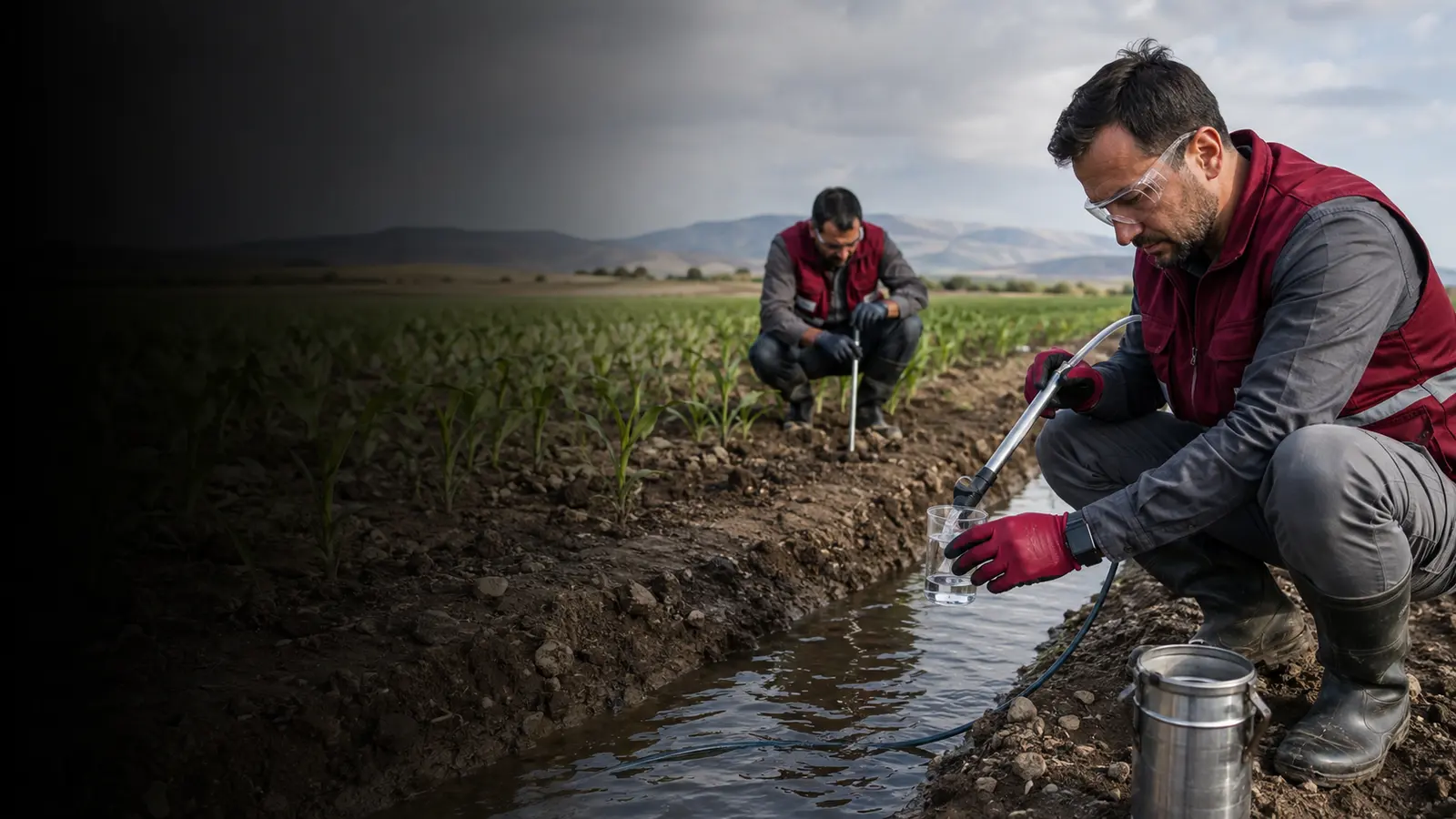
Water and Soil Monitoring: application and decision
Before applying for Water and Soil Monitoring, record the reason for the request, relevant activities or products, sites and target market. Check who is responsible for the application and which requirements actually apply.
Editorial review completePrimary-source basedUpdated: September 5, 2026
Technical focus
Plan water and soil analyses so agricultural inputs can be monitored consistently.
Scope and checkpoints
Water and soil sampling scope
Analysis planning
Result follow-up
Records and evidence
Sampling locations and dates
Water and soil analysis reports
Follow-up actions on results
Preparation
Prepare your water sources, plots and previous analysis results.
Describe your approach to result follow-up.
Confirm the application boundary
Before applying for Water and Soil Monitoring, record the reason for the request, relevant activities or products, sites and target market. Check who is responsible for the application and which requirements actually apply.
Connect evidence to assessment
Each record should identify its owner, date and the product, process or site it covers. Agree how documents, practical implementation and any required testing will be reviewed, and how findings lead to a decision under the applicable programme.
Plan a realistic timetable
Allow for evidence preparation, site availability, tests and correction of findings. A reliable schedule and offer depend on the confirmed scope and readiness; distinguish preparatory work from external assessment and decision dates.
Updated
A sound start verifies the real activity and applicable requirements before the service name.
Let us define the right certificate, scope and application route together.
Share your activity, product, workforce, sites and target date. The QRS team will review your needs and clarify a practical process and quotation scope.